
Table of Contents
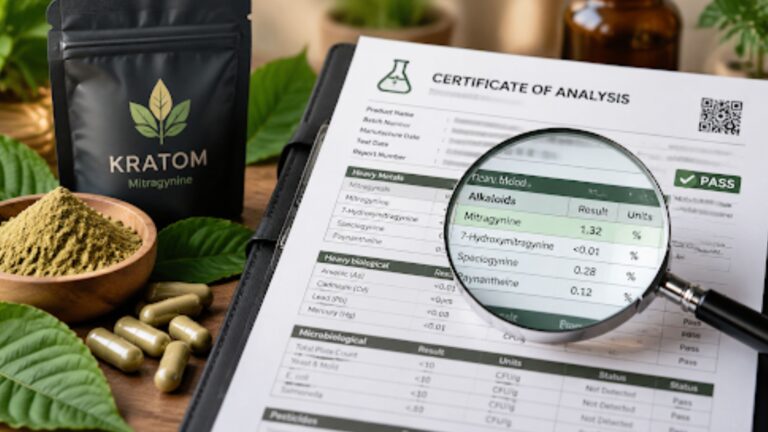
ToggleA certificate of analysis, usually shortened to COA, is one of the most important documents in the alkaloid product market, and one of the least understood by buyers. It is the paperwork that tells you what a laboratory actually found inside a product. Learning to read a COA turns you from someone who trusts a label into someone who can verify it. This guide walks through what a COA contains, how to interpret each part, and the warning signs to watch for.
What a COA Is and Why Does It Exists?
A COA is a report issued by a laboratory after testing a specific batch of a product. It documents the results of that testing, including the alkaloid content and, in a complete report, various safety and purity checks. The purpose of a COA is simple: to provide independent evidence of what a product contains, rather than relying only on the manufacturer’s own claims.
The key word is independent. A COA carries the most weight when it comes from a third party laboratory that has no stake in the sale of the product. A report generated in house by the seller is better than nothing, but it does not offer the same assurance as testing from an outside lab.
Match the Batch First
Before reading any numbers, check one thing: does the COA match the product in front of you? Every COA is tied to a specific batch or lot number. That number should appear on the COA and correspond to the batch you are buying. If a product page shows a COA but the batch number does not match, or if there is no batch number at all, the document is not verifying the product you are about to purchase.
This matters because a COA only certifies the batch that was tested. A brand could test one clean batch and then sell many others. Matching the batch number is the step that connects the paperwork to the actual product. If you plan to buy from a page advertising 7 oh tablets for sale, the batch on the COA should line up with the batch you receive.
Reading the Alkaloid Content
The heart of a COA is the alkaloid analysis. For mitragynine products, this section should report the amount of mitragynine present, and for 7-OH products, it should report the 7-hydroxymitragynine content as a separate figure. Look for results expressed as a concentration, such as milligrams per unit or a percentage by weight.
Compare these tested figures against what the label claims. A trustworthy product shows close agreement between the two. If a label advertises a certain milligram content but the COA reports something noticeably different, that gap is a red flag. The COA is the reality check on marketing.
Also confirm that the alkaloids are reported individually. A single combined figure is less useful than a breakdown, because the breakdown is what tells you the true composition. When you buy 7oh online, the COA should give you a clear, separate number for 7-hydroxymitragynine rather than folding it into a general total.
The Safety and Purity Sections
A thorough COA goes beyond alkaloid content. Depending on the laboratory and the scope of testing, a complete report may include several additional checks.
Heavy metals testing looks for contaminants such as lead, arsenic, cadmium, and mercury, which can accumulate in plant material. Microbial testing checks for harmful bacteria, yeast, and mold. Some COAs also include screening for residual solvents if the product involved a chemical extraction process. These sections typically show a result alongside a pass or fail against an accepted limit.
Not every COA includes every test, and the scope varies by laboratory and product. However, the presence of contaminant and microbial testing is a strong sign that a brand takes safety seriously rather than testing only for the headline alkaloid number.
Check the Laboratory and the Date
Two details near the top or bottom of a COA are easy to overlook but genuinely important.
The first is the laboratory itself. A COA should clearly name the lab that performed the testing, and ideally that lab should be accredited to a recognized standard. An anonymous or unnamed lab undermines the whole point of independent verification.
The second is the date. Testing has a shelf life in the sense that a very old COA may not reflect current production. A recent date, tied to a current batch, is far more meaningful than a report from years ago being reused across new inventory.
Warning Signs to Watch For
Several red flags should make you pause.
A missing batch number, or a batch number that does not match the product, means the COA cannot be tied to what you are buying. A COA that only reports alkaloid content with no contaminant testing may be incomplete. An in house report with no third party laboratory named offers weaker assurance. Large discrepancies between the label and the tested results suggest inaccurate labeling. And a brand that cannot produce a COA at all, or that makes it difficult to find, is asking for a level of trust it has not earned.
Putting It Into Practice
Reading a COA becomes quick once you know the sequence. Confirm the batch number matches. Check that a named third party laboratory performed the testing. Read the alkaloid content and compare it against the label. Look for contaminant and microbial results. Note the date. If all of those line up, you have real evidence of what the product contains. If any of them are missing, you have a reason to ask questions before buying.
The Bottom Line
A certificate of analysis is the single best tool a buyer has for verifying an alkaloid product. It replaces trust with evidence, provided you know how to read it. Match the batch, confirm the lab, compare the alkaloid figures against the label, and check for safety testing and a recent date. A brand that makes a complete, current, third party COA easy to find is giving you exactly what you need to make an informed decision.